

Introduction
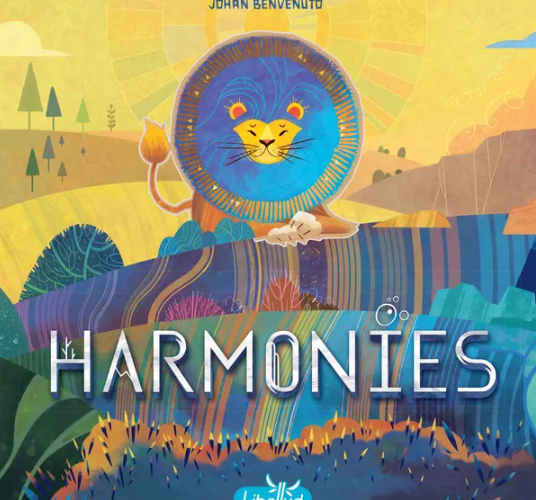
Have you ever stood in the middle of a forest, or even just a quiet local park, and marvelled at how everything just…works? Nature has a brilliant, delicate way of balancing itself. Every tree, stream, and creature has a specific role to play. Capturing that feeling on a tabletop can be tricky, but Harmonies manages it. It is a remarkably beautiful, tactile board game that puts the fragile balance of an ecosystem right into your hands. It’s a game that starts with a blank slate and leaves you asking a profound question: what happens when we build without thinking about the creatures that already rely on that space?
How to Play
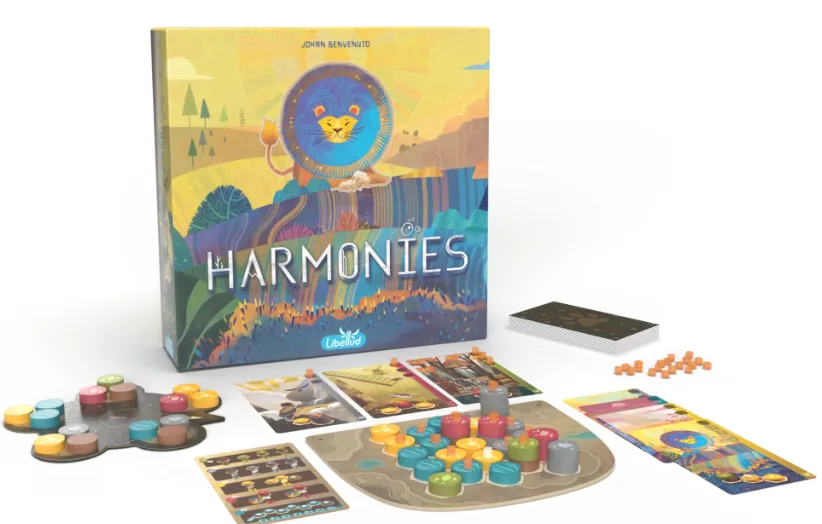
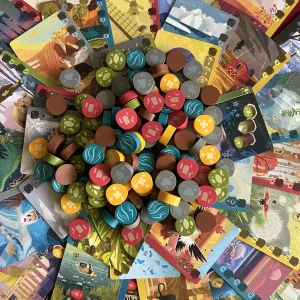
The mechanics of Harmonies are wonderfully simple to grasp, which keeps the cognitive load low while the strategic depth remains high. During a turn, you draft three colored wooden tokens representing mountains, fields, trees, water, and buildings. Then place them onto your personal landscape board. Your goal is to arrange these tokens into specific shapes and heights to recreate the preferred habitats of different animal cards.
Once your landscape matches a card’s exact requirement, you get to welcome that animal into your ecosystem. The real challenge, however, lies in how you overlap these patterns. Your landscape board is limited, meaning you must carefully plan how a single river might serve both a beaver and a fish, or how adding a building might interrupt a continuous line of trees. It’s a brilliant visual representation of how different elements of a landscape must connect to support diverse life.
Educational Topics
1. Understanding Habitats (Systems Thinking) Every animal in Harmonies has strict requirements to survive and thrive. A bear might need a specific mix of mountains and trees, while a frog needs water directly bordering fields. You can use this mechanic to discuss how real-world ecosystems function. It takes a complex concept like “systems thinking” and demystifies it. Instead of reading about habitats in a textbook, learners get a tactile experience where they are literally piecing together the building blocks of an ecosystem, discovering firsthand that nothing exists in isolation.
2. Animal Coexistence (Resource Management) Because your player board is small, you quickly realize you can’t build isolated, separate habitats for every single animal. You have to weave them together. This beautifully models how different species in the wild share resources, overlap in territories, and rely on the exact same water sources or tree canopies to survive. It’s a fantastic way to explain how biodiversity works in a shared, finite space, showing that a healthy ecosystem is about coexistence, not segregation. It provides a great jumping off point for discussing food webs.
3. The Fragility of Ecosystems (Environmental Impact) The game also includes “building” tokens, and as space gets tighter, tough choices emerge. Sometimes, to score points or squeeze in a new animal, you might have to break up an existing natural habitat or prioritize placing structures over nature. This mechanic serves as a powerful mirror for real-world environmental impact. It opens the door for meaningful conversations about the consequences of habitat destruction, deforestation, and the critical importance of living in harmony with nature rather than just paving over it for quick gains.
Discussion Prompts:
- Why do you think certain animals in the game need completely different landscapes to survive?
- How did changing one part of your landscape to help one animal affect the other animals waiting to move in?
- What do you think life will be like for the animals within the ecosystem you have built?
- What happens to the wildlife when we prioritize placing building tokens over natural landscapes?
Summary
Harmonies is far more than a relaxing puzzle game; it’s a tabletop ecosystem. By tasking players with constructing the exact environments needed for animals to flourish, it provides a perfect, tactile foundation for conversations about ecology, coexistence, and our responsibility to protect the fragile habitats around us. It’s a must-have for the classroom or the family game table.