

The annual Jisc Digifest event took place over the 10th and 11th of March this year and as usual it was a brilliant couple of days of talks, networking and meeting with vendors.
It has taken me a while to start writing up about it because there was so much going on it’s been hard to gather all my thoughts on it!

It was an early start with me jumping on a 0530 train, but I got to Birmingham in good time for the start of the conference.
Talks
Opening Keynote
The opening keynote was by Melati Wijsen. The work she has done, influencing global politics is inspiring. If you haven’t heard her name before she, and her sister, are behind the Bye Bye Plastic Bags movement and successfully led to the banning of single use plastic bags in their home island of Bali, and influenced it also being implemented worldwide. She has also gone on to found YOUTHTOPIA which aims to help young people become changemakers. Two points she made stood out to me in particular.
1. Her school supported her every step of the way.
Not just by allowing her to take part in her Bye Bye Plastic Bags initiative, but going so far as to implement her learning from it, and activities she did as core parts of her assessment. One example she gave was how her English teacher, instead of setting her the ordinary assessment/exam asked her to write about her meetings with the UN and what she learnt from it. It left me wondering how on Earth we can manage to integrate such a system in the public education system of the UK? How can we influence our very rigid, exam and league table based system to encourage such creativity?
2. Include young people in all decision making and aspects of their education.
Young people are desperate to be changemakers, to have a real impact on their communities and societies. Often when decisions are being made at our institutions do we include students from the beginning? Or do we only think to ask them as an afterthought, after the decision making has been done? How can we change approaches to ensure they are included from the beginning.
Unlocking AI in practice, building AI literacy for effective, ethical teaching and learnign across colleges and universities
Next on my list was a talk by Paddy Shepperd, Jisc’s senior AI specialist as he explained his process used and the concepts behind Jisc’s AI Literacy training programme. I have had the opportunity to complete the online versions of these trainings and they are useful. There are a lot of links off to other content to help broaden your knowledge. For someone like myself, who lives and breathes educational technology they could be a bit basic in places, however these are designed for the average educator and I believe they hit the nail squarely on the head for that audience.
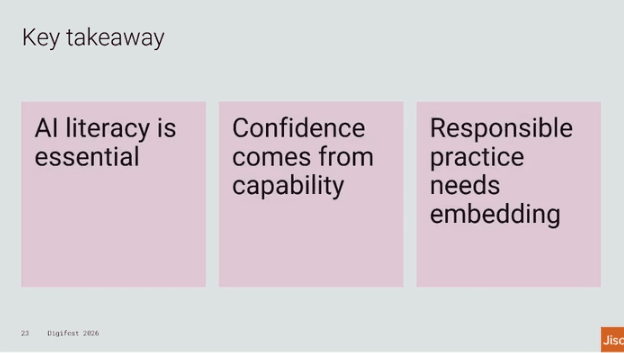
The key takeaways match exactly what I have seen anecdotally. AI literacy is essential, but I would go a little further on this and say that Digital literacy as a whole is essential. Once you have that literacy, you have built up your capability which builds your confidence. And as with every piece of technology we implement, you need to embed the responsible practice. Nothing groundbreaking, but great to see that the researched evidence matches my anecdotal experience.
Adobe workshop on creative assignments
This session was brilliant. Provided us with a practical resource to help with ensuring creativity and originality in assessments. That resource being a formula for making assignment prompts:
![Formula for creating prompts: Is there a specific aspect that should be investigated?: In the context of [a meaningful issue, theme, or scenario} Provides an identity: You will take on the role of [a relevant role], [Perspective] This is the detail of the academic content: Your task is to create [a product, perfomance, or solution]... Defining this shapes how the student communicates: ...for [a specific audience or stakeholder], Guide student with modality options: Output-Format](https://gamesforall.net/wp-content/uploads/2026/03/Formula-for-creative-assignments-scaled.jpg)
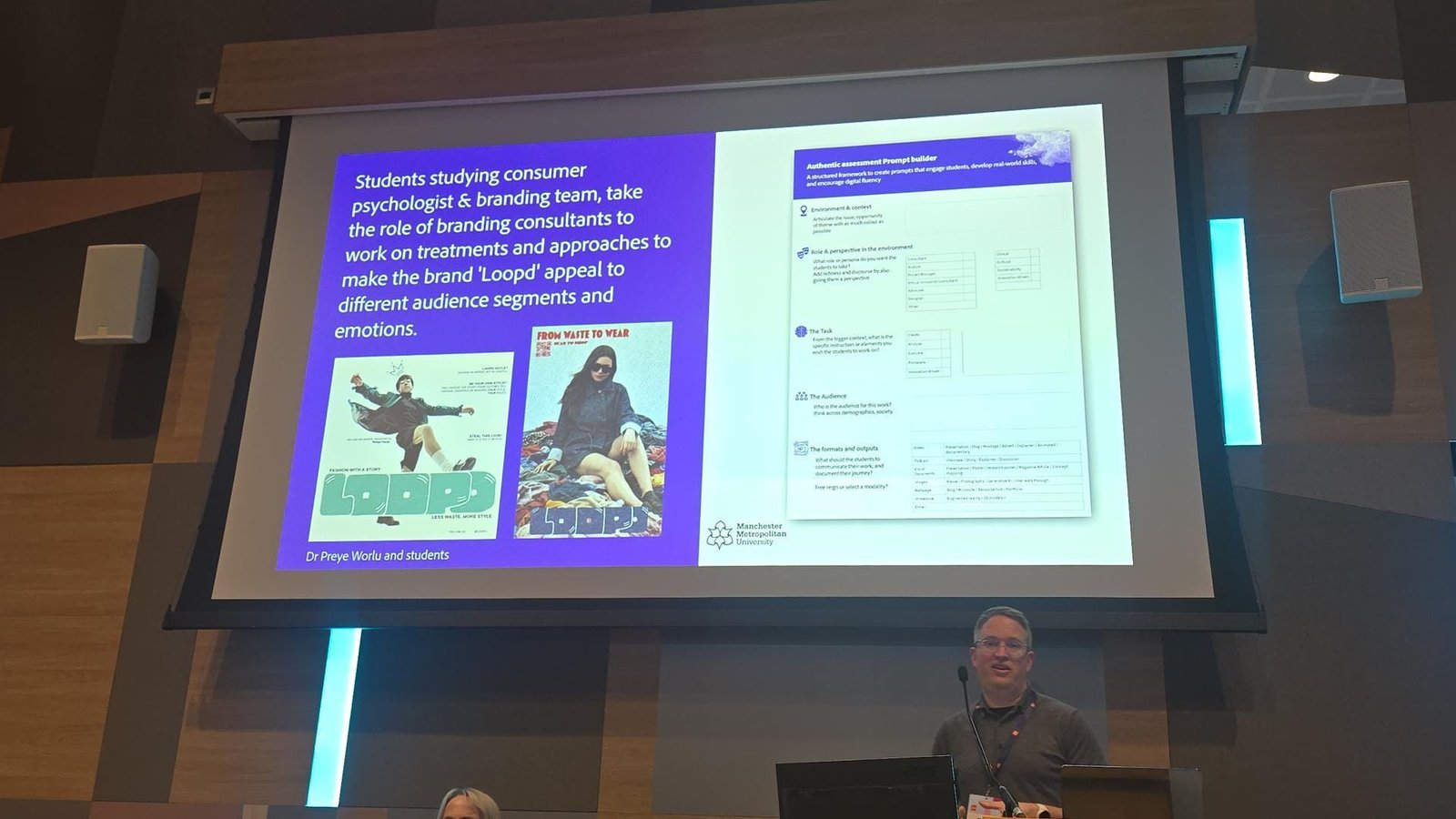
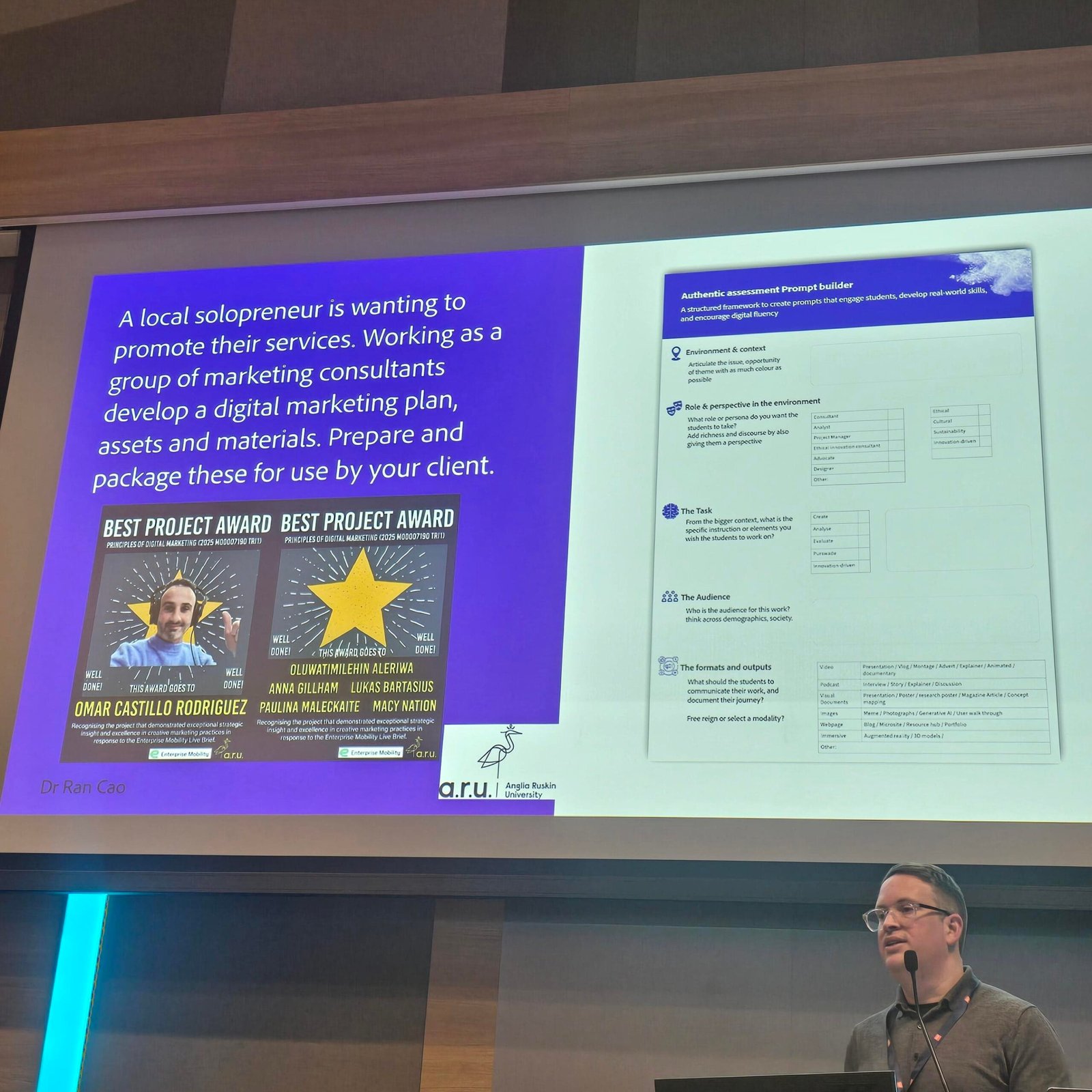
We worked together as a table looking at how we could set up such an assignment for a particular school – we decided on school of nursing and the topic of Sepsis. The conversation and ideas were fast flowing, and having a framework in place allowed even those of us with no idea of the content knowledge to have a clear concept of what the students would have to create and the level of information that would be included. A brilliant and thought provoking session that put pedagogy at the heart of assessment creation.
Digital Inclusion Action Plan
The opening session for day two covered the impact of the Government’s relatively new Digital Inclusion Action Plan (DIAP). It was a brilliant discussion between leaders across the tertiary education sector. We, as a sector, need to be addressing the real issue of the digital divide. Traditionally this has been seen as the gap between those who can afford new technology and those who cannot. But the DIAP goes further and outlines that the digital divide includes digital competency and capability. Those who know how to use technology and embrace it, versus those who don’t. Framing digital capability training for staff and students not just as a nice to have, but as a key aspect of an organisation’s inclusion strategy on a par with numeracy and english literacy skills. this is something I have felt for a while and it is great to see that the government, and other organisations are taking it just as seriously as I do!
Jisc and Adobe workshop of creativity in the world of AI
This was, unfortunately, the most disappointing session of the 2 days. I was hoping for a session where we would be shown some of Adobe’s AI tools then have chance to workshop using them in our teaching, learning and assessment without stifling human creativity. Sadly that isn’t what we got. We did have a demonstration of some very cool new tools from adobe in the second half of the session. Including the ability to search for objects in a video using Premier Pro to have it surface all the clips that object is within e.g. searching for ‘clock face’ and it showing clips where a clock face is visible. That tool alone is potentially game changing for many who use videos regularly.
However, the first half from Jisc felt like we were being lectured that AI is here to stay and we just have to live with it. The only ‘workshop’ part was 4 minutes to discuss on our tables where ‘should’ human creativity be the primary focus. Which felt like it completely missed the issue. It isn’t where should it be the primary focus, it always should be the primary focus. We didn’t even get chance to discuss our answers across the room. Very disappointing and out of sync with the rest of the event.
Developing a digital mindset
Another great panel, this time looking at how organisations are using the Jisc Discovery tool to aid in their digital capabilities and upskilling projects. The tool itself is definitely not a silver bullet, but it can be used to enable discussions around people’s digital capabilities. It allows them to have a glimpse into what they didn’t know they didn’t know. Its an important first step and requires a lot of support around it to provide tailored training where teams require it. The examples given really helped me as I’ll be implementing the tool at my organisation very soon, so it will help me set expectations.
Closing Keynote
This was the best session by far, a very engaging talk by Professor Danny Liu from the university of Sydney ‘Are we asking the right questions in the age of generative AI?’
There were many stand out parts of his talk but the following stuck with me in particular:
GenAI is like a fire
Generative AI is spreading everywhere, much like a fire does. It is covering every aspect of life and education, admittedly destroying things in its wake. But fire doesn’t have to be a purely destructive force. Danny spoke about plants found in Australia which are adapted so their seed pods only burst after being set on fire, allowing their seeds to settle in fresh, rejuvenated land where their competitors growth has burnt away. There are many plants in Australia adapted to the wildfires, and it is something Indigenous tribes have cultivated over centuries. If we can cultivate the spread of AI, guide it where it needs to go so it can burn away some of the old overgrown chaff, then new, rejuvenated and exciting growth can happen.
Offer GenAI like a menu
Generative AI is far more nuanced in it’s abilities than many assessment policies make out. The initial traffic light system leads far too much to interpretation, causing some students to avoid tools entirely and others to go all in when actually the approach should be far more nuanced.
Danny introduced his metaphorical AI Menu:
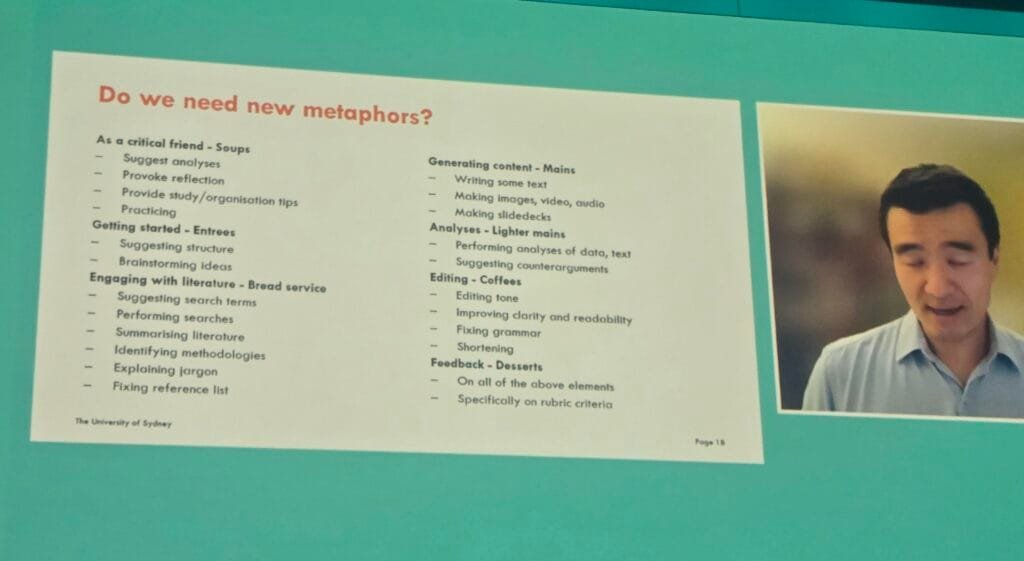
This approach looks at AI tools as though you were selecting a meal. You want a healthy balance from the different categories. Whilst a meal can be entirely the bread selection, it isn’t a healthy or good meal if it is. Encourage students to pick one or two things from each category to build their meal instead.
The fundamentals of education
Finally he covered what makes someone educated. Is it the Stuff they know – Content Knowledge? This is often seen as king in education but is only a small part of the whole. What about Skills? That’s also seen as important but its still not the whole thing. How about the Soul? the soft skills that are increasingly becoming important in today’s society?
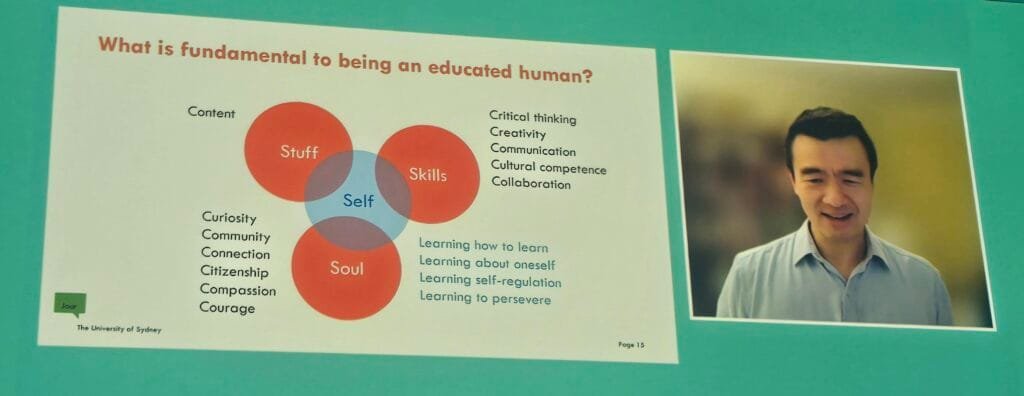
Danny argued it is all three of these, each linked together by the concept of Self. All these are crucial to being an educated human, and raise the question: Are we ensuring all our teaching and assessment meet all 4 criteria?
The changing questions from AI
He finished by outlining the changing questions AI is generating of us as teachers. In 2022-24 as AI came to the fore the question was How are we teaching, learning and assessing? From 24-26 the question has predominantly been What are we teaching, learning and assessing?, Last year into this it morphed again into Why are we (still) doing this? and the question for the future should be Who do we want our students to become.
Vendors
There were a lot of vendors at the event. I didn’t spend as long looking around them this year as I have done in the past, but those I did meet with were worthwhile.
Adobe

It was lovely to see the Adobe education team again this year. I made another chocolate bar cover for my daughter and we had a great chat about the new and upcoming features within Adobe. I’m still working on the Adobe Creative Campus initiative, I promise!
Kahoot
I was able to have a chat with Cathrine from Kahoot again which was great. Their tool has morphed from just being a gamified quiz tool into its own professional interactive presentation tool. It was impressive to see what you can do with it now.
Panopto
I was impressed with the demonstration from Panopto this year. Their player supporting timestamped notes and comment conversations definitely places it higher than the vast majority of other video tools when it comes to meeting Mayer’s definition of active learning. Combine this with their new AI tool’s ability to search a video for a particular phrase and have it show you not only exactly where it is in the transcript, but if it has appeared in the video itself as text, is very impressive and powerful for providing educational tools.
I’m still not fully sold on lecture capture as an intrinsically useful tool, but as a tool for hosting video content and encouraging active engagement and participation it does look good.
Networking
I had chance to meet up and chat with peers from across the tertiary education sector, many of whom I call friends now. It’s always fun, if a bit overwhelming being amongst 800 other professionals all dealing with the same challenges and experiences as one another.
I was happy to meet up with many people from the Higher Education Digital Practice and Innovation Network (HEDPIN) even if our planned proper meet up ended up not going to plan!
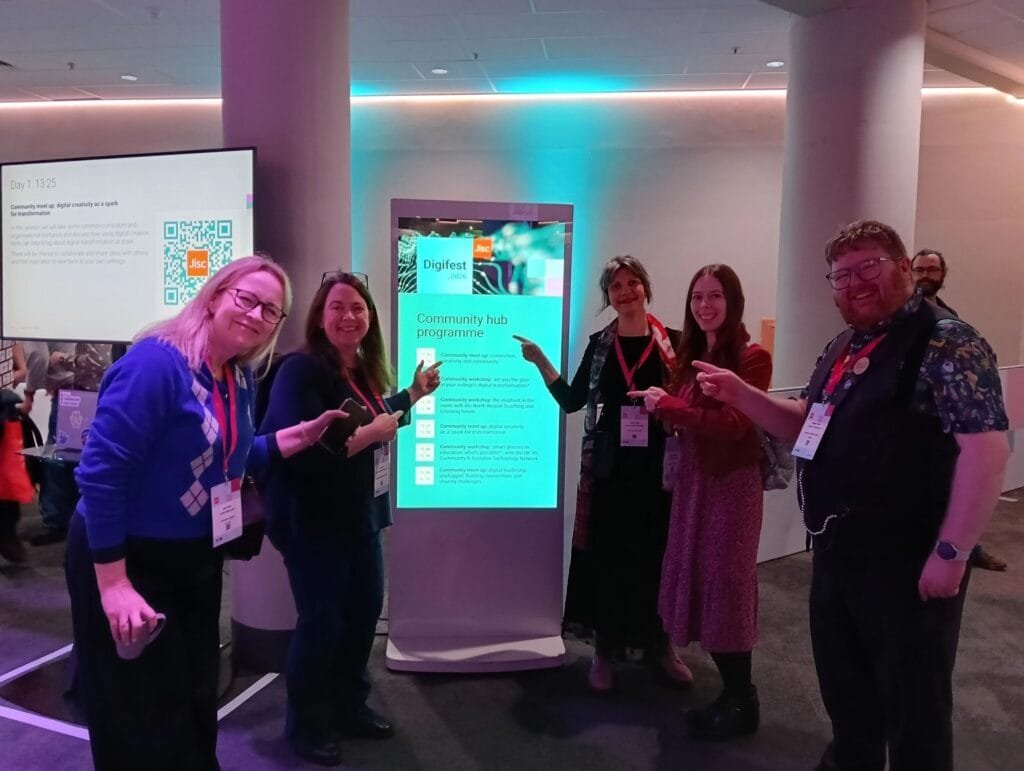
I had so many conversations covering every aspect of educational technology. It was a lot of fun and left me feeling enthused for the coming year, as digifest always does!
There was also a large central area which contained a triangular centerpiece. On one side was a reminder of what tech was like when Jisc first started – I particularly enjoyed playing mario kart on the N64 again – happy memories! Opposite that side was a place to chat with Jisc about their current plans and offerings. I didn’t spend too long here because I managed to collar most of the Jisc employees I wanted to talk to out around the floor.
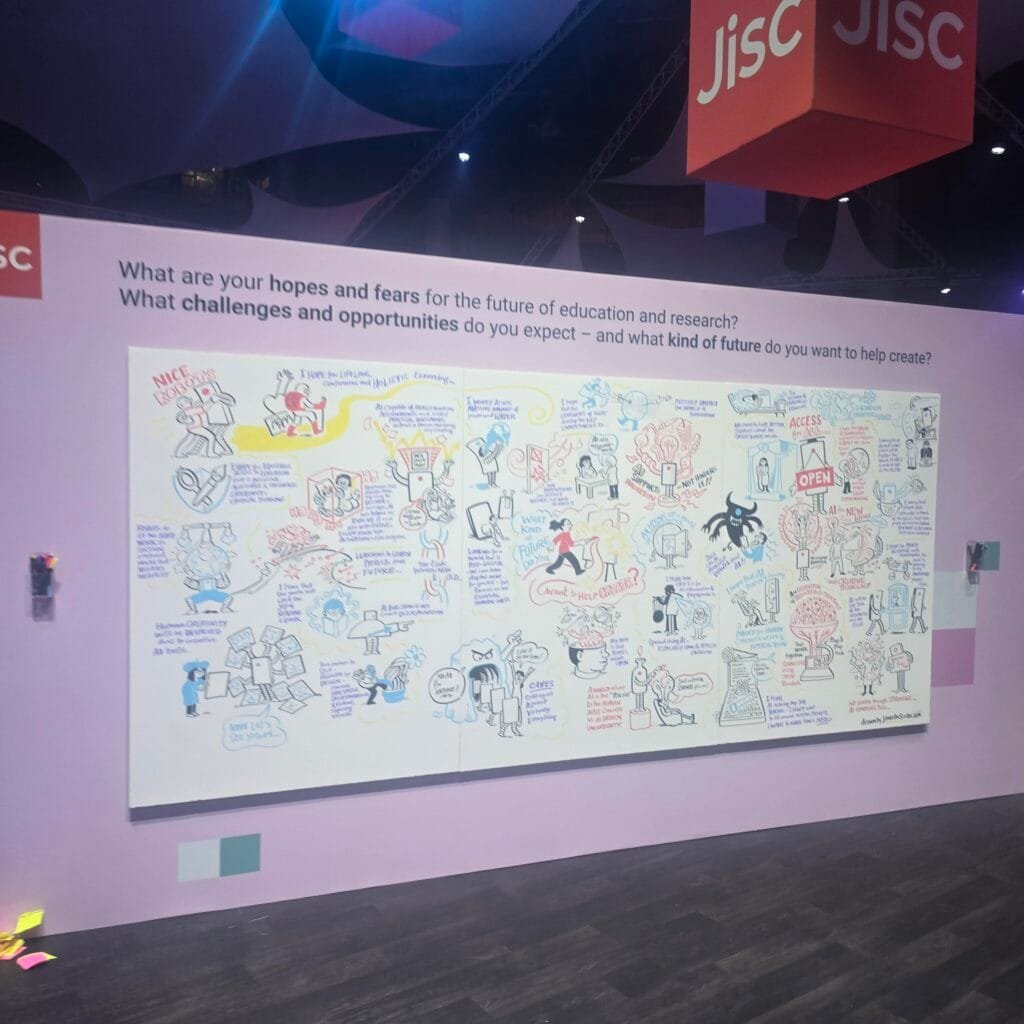
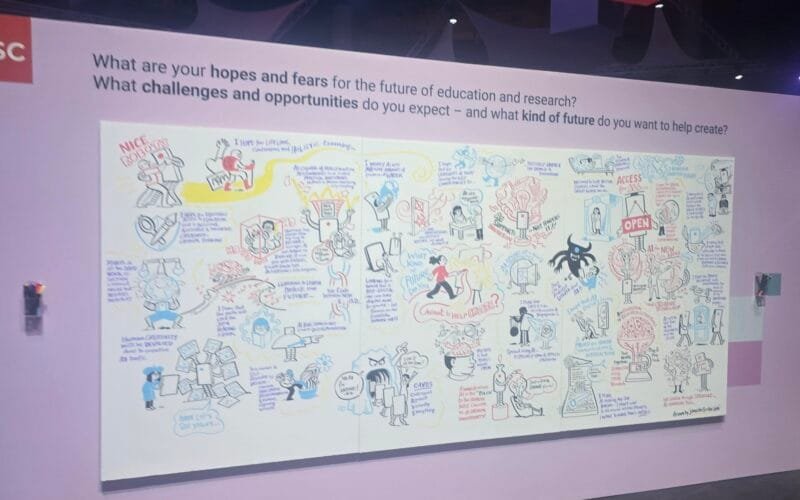
And on the third side was a living art exhibit created over the 2 days by the very talented James the Scribe from post it notes added over the course of the event.
In summary
An excellent event as ever from Jisc. Nothing that stood out as new to me, but that is a good thing as I would wonder how I managed to miss it if it had. I love the energy and passion that is so clear in our sector. roll on Digifest 2027!